
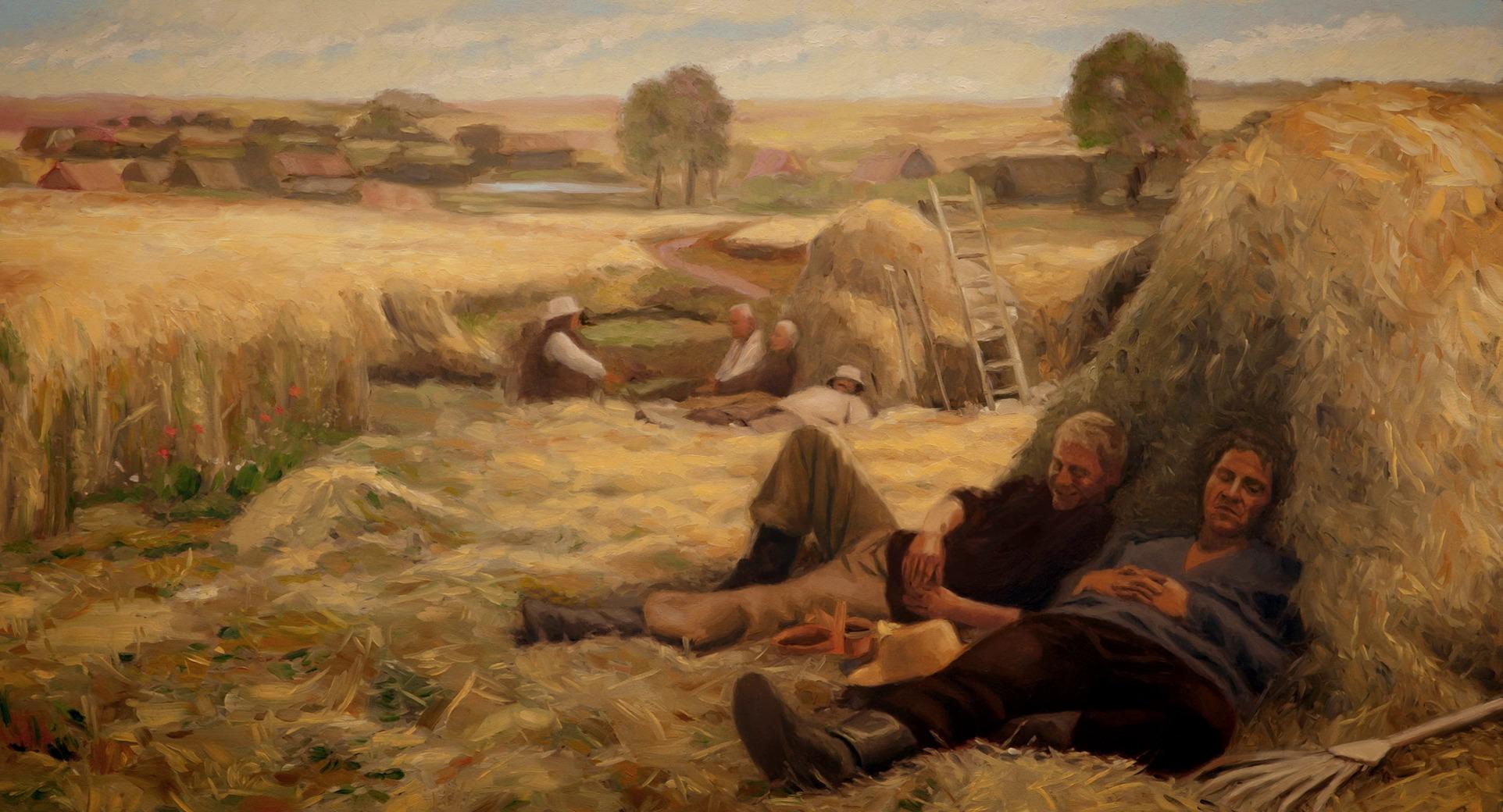
There are voices the world often refuses to hear—the quiet ones that rise from the soil, the hearts that beat beneath the dust of forgotten villages, and the eyes that have seen too much hunger to still dream freely. Yet in Le Champ de la Poésie, Haitian poet Frantz M. Dupiton gives those muted souls a language so powerful that silence itself begins to tremble. His words echo through generations, not only as art, but as voice—a declaration that the simple man, the peasant, the marginalized, still owns a voice that can heal and awaken the world’s sleeping conscience. Dupiton’s poems are not written from ivory towers or air-conditioned rooms. They are born from the toughened hands of men who plow the earth, from mothers who sing while their children sleep hungry, and from the deep rhythm of the Haitian countryside, where every breeze carries both pain and prayer. In the poem Paroles Fleuries d’un Frère Paysan, the poet asks, almost in defiance, “Who am I—formally a peasant, or simply a human being?” That single question pierces centuries of arrogance and injustice. It reminds us that the worth of a human cannot be measured by wealth or sophistication, but by the purity of their heart and the truth of their labor.
For Dupiton, the peasant is not a symbol of poverty but of authentic humanity. He is the guardian of values that modern civilization has traded for convenience and pride. “I am attached to nature,” the poet writes, “She has bloomed my heart with humility, wisdom, and understanding.” These words are not nostalgic; they are revolutionary. They invite readers to rethink progress—not as a race toward material power, but as a return to empathy, to roots, and to the moral soil from which all human dignity grows. In today’s world, where technology connects us yet hearts drift further apart, Dupiton’s message feels prophetic. The peasant’s voice becomes the voice of conscience—reminding us that the measure of a society is not how high its towers rise, but how gently it holds the weakest among them. Throughout Le Champ de la Poésie, Dupiton’s verses denounce hypocrisy with a clarity that feels both poetic and political. In Hey Précieux Raffiné ! he confronts the so-called “civilized” classes who mock the rural poor. “You continue to incline me under the filth of uncivilized,” he writes, addressing those who hide cruelty behind refinement. His tone is not of hatred but of revelation: he exposes a system that glorifies intellect while crucifying innocence.
The peasant, in Dupiton’s world, becomes the eternal witness—he watches how greed dresses as sophistication and how exploitation wears the mask of progress. Yet even as he suffers, he remains unbroken. His spirit stands taller than the empires that attempt to silence him. “I am a man of Ayiti,” Dupiton proclaims, “a native of the highlands.” This declaration is not a whisper; it is a roar against centuries of colonial arrogance, a reaffirmation that identity cannot be purchased or erased. What makes Dupiton’s poetry goes beyond borders is that his “peasant” is not just Haitian—it is universal. He represents the fisherman in Asia, the farmer in Africa, the migrant worker in America, the forgotten laborer everywhere. In his humility lies the deepest wisdom. He does not own libraries, but he understands the seasons; he does not speak in theories, but he knows patience. In the poet’s eyes, the peasant carries the moral intelligence that modern societies have lost—the ability to live simply, to love deeply, to respect the land. When Dupiton writes, “The nature is linked to my enchanted eye and crowns my hope,” he transforms agriculture into philosophy. The field becomes a sanctuary, and labor becomes prayer. His hoe is not a mere tool but an instrument of faith—a reminder that creation and survival are one and the same.
There is a quiet dignity in Dupiton’s portrayal of suffering. He never romanticizes misery, yet he never allows it to define humanity. In Pourtant, Je ne Suis Pas un Étranger, he writes as a man torn between despair and pride: “I am a proud Haitian, I love humanity at its peak… My heart bleeds for Palestine, I defend the poor.” Here the poet’s empathy crosses all borders—his cry for the peasant merges with his cry for the oppressed across the globe. The message is universal: indifference anywhere is injustice everywhere. Dupiton sees poverty not as failure but as evidence of a system that has failed humanity itself. The “indifferent world,” as he portrays it, is not merely external—it lives within us when we stop feeling, when we scroll past hunger, when we mistake privilege for destiny. His poetry shakes that numbness awake. His book is more than an anthology; it is a revolution whispered in verses—a plea to see, to feel, and to remember that human worth does not depend on wealth, education, or race, but on our ability to love and to care.
Stay connected to the world of poetry that breathes light into every heart.
Join Frantz M. Dupiton’s circle of readers and receive reflections, new writings, and glimpses into his poetic universe.
Because poetry isn’t just read it’s lived.
Through poetry, we remember who we are and who we still can become.
© Copyrights 2025 Frantz Dupiton. All Rights Reserved
